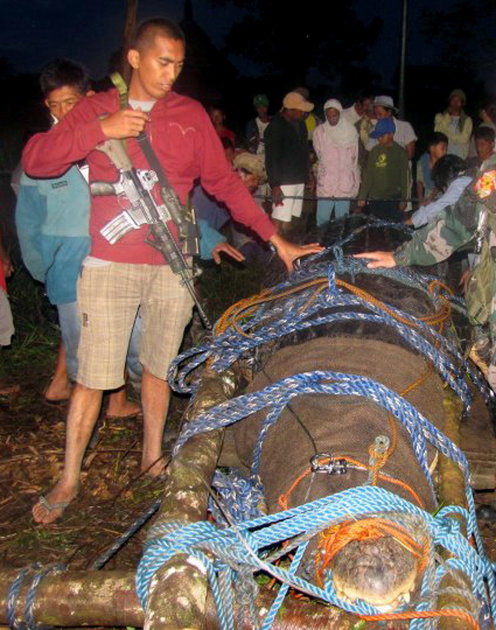
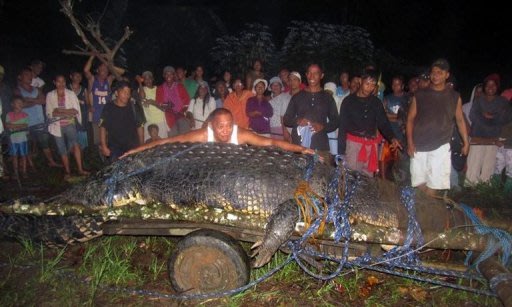
A monster 21-foot (6.4-meter) saltwater crocodile, believed to be the biggest ever captured, has been trapped in the southern Philippines after a spate of fatal attacks, officials said Tuesday.
The 1,075-kg (2,370-pound) male is suspected of eating a farmer who went missing in July in the town of Bunawan, and of killing a 12-year-old girl whose head was bitten off two years ago, crocodile hunter Rollie Sumiller said.
The hunter examined the crocodile's stomach contents by forcing it to vomit after it was captured Saturday, but there was no trace of human remains or of several water buffaloes also reported missing by locals.
"The community was relieved," Sumiller said of the capture, but added: "We're not really sure if this is the man-eater, because there have been other sightings of other crocodiles in the area."
The local government of the impoverished town of 30,000 people has decided against putting down the reptile, and will instead build a nature park where it will go on display.
Josefina de Leon, wildlife division chief at the Philippines environment ministry, said the beast was likely the biggest crocodile ever captured anywhere in the world.
"Based on existing records the largest that had been captured previously was 5.48 meters long," she told AFP.
The Philippine specimen would easily dwarf the largest captive saltwater crocodile, which the Guinness World Records website lists as Cassius, a 5.48-meter (18-foot) male which lives at an Australian nature park.
Press reports also describe other huge crocs including a 6.2-meter (20.3-foot) adult male killed in Papua New Guinea in 1982 that was measured after it was skinned.
The Bunawan hunting team, employed by a government-run crocodile breeding farm, began laying bait using chicken, pork and dog meat on August 15 in an attempt to snare the beast.
But the reptile, which measured three feet (0.91 meters) across its back, simply bit off both the meat and the line it was skewered on.
A heavy metal cable finally proved beyond the power of its jaws, and the beast was subdued in a creek late Saturday with the help of about 30 local men.
It was the team's second attempt after a failed expedition launched in response to the fatal 2009 attack.
Beyond the mark of the hook inside its upper jaw, the crocodile did not appear to have sustained any serious injuries, Sumiller said.
Bunawan Mayor Edwin Cox Elorde said the government would build a nature park showcasing the giant crocodile and other species found in the vast marshland on the upper reaches of the massive Agusan river basin on Mindanao island.
"It will be the biggest star of the park," Elorde told reporters.
Sumiller said the plan was the best option available for the creature.
"He's a problem crocodile that needs to be taken from the wild... and used for eco-tourism," he said.
Crocodylus porosus, or the estuarine crocodile, is the world's largest reptile. It grows to five or six metres in length and can live up to 100 years.
While not considered an endangered species globally, it is "critically endangered" in the Philippines, where it is hunted for its hide which is used in the fashion industry, de Leon said.
"There have been very few sightings of porosus in the wild in the Philippines in recent years," she added.
In July, a saltwater crocodile measuring almost 14 feet (4.2 meters) was caught on the western Philippine island of Palawan after it killed a man.
(CNN) -- The most prominent face of terror in America and beyond, Osama Bin Laden, has been killed in Pakistan, U.S. officials said Sunday night. Bin Laden was the leader of al Qaeda, the terrorist network behind the September 11, 2001, attacks on the United States. U.S. officials said that their forces have the body of bin Laden. The enormity of the destruction -- the World Trade Center's towers devastated by two hijacked airplanes, the Pentagon partially destroyed by a third hijacked jetliner, a fourth flight crashed in rural Pennsylvania, and more than 3,000 people killed -- gave bin Laden a global presence. The Saudi-born zealot commanded an organization run like a rogue multinational firm, experts said, with subsidiaries operating secretly in dozens of countries, plotting terror, raising money and recruiting young Muslim men -- even boys -- from many nations to its training camps in Afghanistan. He used the fruits of his family's success -- a personal fortune estimated in the hundreds of millions of dollars -- to help finance al Qaeda in its quest for a new pan-Islamic religious state. How much bin Laden got in the settlement of the family estate is still a matter of contention. Estimates range from tens of millions to hundreds of millions. Even before September 11, bin Laden was already on the FBI's Ten Most Wanted Fugitives list. He had been implicated in a series of deadly, high-profile attacks that had grown in their intensity and success during the 1990s. They included a deadly firefight with U.S. soldiers in Somalia in October 1993, the bombings of two U.S. embassies in East Africa that killed 224 in August 1998, and an attack on the USS Cole that killed 17 sailors in October 2000. Bin Laden eluded capture for years, once reportedly slipping out of a training camp in Afghanistan just hours before a barrage of U.S. cruise missiles destroyed it. On September 11, sources said, the evidence immediately pointed to bin Laden. Within days, those close to the investigation said they had their proof. Six days after the attack, President George W. Bush made it clear Osama bin Laden was the No. 1 suspect. "I want justice," Bush said. "There's an old poster out West that said, 'Wanted, dead or alive.'" Osama bin Laden was born in the kingdom of Saudi Arabia in 1957, the 17th of 52 children in a family that had struck it rich in the construction business. His father, Mohamed bin Laden, was a native of Yemen, who immigrated to Saudi Arabia as a child. He became a billionaire by building his company into the largest construction firm in the Saudi kingdom. As Saudi Arabia became flush with oil money, so, too, did the bin Laden family business, as Osama's father cultivated and exploited connections within the royal family. One of the elder bin Laden's four wives -- described as Syrian in some accounts -- was Osama's mother. The young bin Laden inherited a share of the family fortune at an early age after his father died in an aircraft accident. The bin Ladens were noted for their religious commitment. In his youth, Osama studied with Muslim scholars. Two of the family business' most prestigious projects also left a lasting impression: the renovations of mosques at Mecca and Medina, Islam's two holiest places. As a young man attending college in Jeddah, Osama's interest in religion started to take a political turn. One of his professors was Abdullah Azzam, a Palestinian scholar who was a key figure in the rise of a new pan-Islamic religious movement. Azzam founded an organization to help the mujahedeen fighting to repel the Soviet Union's invasion of Afghanistan in 1979. Bin Laden soon became the organization's top financier, using his family connections to raise money. He left as a volunteer for Afghanistan at 22, joining the U.S.-backed call to arms against the Soviets. He remained there for a decade, using construction equipment from his family's business to help the Muslim guerrilla forces build shelters, tunnels and roads through the rugged Afghan mountains, and at times taking part in battle. In the late 1980s, bin Laden founded al Qaeda, Arabic for "the base," an organization that CNN terrorism analyst and author Peter Bergen says had fairly prosaic beginnings. One of its purposes was to provide documentation for Arab fighters who fought against the Soviets in Afghanistan, including death certificates. Al Qaeda, under bin Laden's leadership, ran a number of guesthouses for these Arab fighters and their families. It also operated training camps to help them prepare for the fight against the Soviets. In the early 1990s, with the disintegration of the Soviet Union, bin Laden turned his sights on the world's remaining superpower -- the United States. War-hardened and victorious, he returned to Saudi Arabia following the Soviet retreat from Afghanistan. In a 1997 CNN interview, bin Laden declared a "jihad," or "holy war," against the United States. The Iraqi invasion of Kuwait provided the next turning point in Osama bin Laden's career. When the United States sent troops to Saudi Arabia for battle against Iraq in the Persian Gulf War, bin Laden was outraged. He had offered his own men to defend the Saudi kingdom but the Saudi government ignored his plan. He began to target the United States for its presence in Saudi Arabia, home to the Muslim holy sites of Mecca and Medina. With bin Laden's criticisms creating too much friction with the Saudi government, he and his supporters left for Sudan in 1991. There, according to U.S. officials, al Qaeda began to evolve into a terror network, with bin Laden at its helm. Tapping into his personal fortune, bin Laden operated a range of businesses involved in construction, farming and exporting. Although the U.S. government was unaware of it at the time, bin Laden was already actively working against it. According to court testimony, he sent one of his top lieutenants, Mohammed Atef, to help train Somalis to attack U.S. peacekeeping troops stationed there. Bin Laden would later hint, during an interview with CNN, of his involvement in the deaths of 18 U.S. Army Rangers in 1993 in Mogadishu. Also in 1993, terrorists bombed the World Trade Center in New York, killing six and wounding hundreds. Eventually, bin Laden would be named along with many others as an unindicted co-conspirator in that case. The mastermind of the attack, Ramzi Yousef, would later be revealed to have close ties to al Qaeda. In 1996, bin Laden took his war against the United States a step further. By then, he had been stripped of his Saudi citizenship and forced by Sudanese officials, under pressure from the United States, to leave that country. He returned to Afghanistan where he received harbor from the fundamentalist Taliban, who were ruling the country. By then, the United States had begun to recognize a growing threat from bin Laden, citing him as a financier of terrorism in a government report. According to reports, however, the U.S. government passed up a Sudanese government offer to turn over bin Laden, because at the time it had no criminal charges against him. The Saudis, according to an interview with their former intelligence chief in Time magazine, also declined to take custody of bin Laden. In Afghanistan in 1996, bin Laden issued a "fatwa," or a religious order, entitled "Declaration of War Against Americans Who Occupy the Lands of the Two Holy Mosques." "There is no more important thing than pushing the American occupier out," decreed the fatwa, which praised Muslim youths willing to die to accomplish that goal: "Youths only want one thing, to kill (U.S. soldiers) so they can get to Paradise." In his first interview with Western media in 1997, bin Laden told CNN that the United States was "unjust, criminal and tyrannical." "The U.S. today, as a result of the arrogant atmosphere, has set a double standard, calling whoever goes against its injustice a terrorist," he said in the interview. "It wants to occupy our countries, steal our resources, impose on us agents to rule us." In February 1998, he expanded his target list, issuing a new fatwa against all Americans, including civilians. They were to be killed wherever they might be found anywhere in the world, he decreed. This new fatwa announced the creation of the "The World Islamic Front for Jihad against the Jews and the Crusaders" and was co-signed by Dr. Ayman al-Zawahiri, head of Egypt's al-Jihad terrorist group. Six months later, explosions destroyed the U.S. embassies in Kenya and Tanzania, killing 224 people and injuring 4,000 more. U.S. prosecutors later indicted bin Laden for masterminding those attacks. By the time three hijacked airliners struck the World Trade Center and the Pentagon, symbols of the U.S. business and military might, bin Laden's terror network had become global in its reach. The organization soon became America's prime target in Bush's war against global terrorism. Bin Laden, its founder, became the most-wanted man in the world. Then-U.S. Secretary of State Colin Powell explained al Qaeda's network this way: "Osama bin Laden is the chairman of the holding company, and within that holding company are terrorist cells and organizations in dozens of countries around the world, any of them capable of committing a terrorist act." "It's not enough to get one individual, although we'll start with that one individual," Powell said. In statements released from his hideouts in Afghanistan after September 11, bin Laden denied al Qaeda was responsible for the attacks. A videotape of bin Laden later obtained and released by the U.S. government, however, showed him saying he knew the September 11 attacks were coming, chuckling and gloating about their toll. Even with his knowledge of the construction trade, he said with a smile, he did not expect the twin towers of the World Trade Center to collapse completely. Speaking in an earlier video recording that was first broadcast over the Arabic-language television network Al-Jazeera, bin Laden said America is "filled with fear from the north, south, east and west. Thank God for that." "These events have split the world into two camps -- belief and disbelief," he said. "America will never dream or know or taste security or safety unless we know safety and security in our land and in Palestine." Bin Laden had taken advantage of his time in Afghanistan, cementing his ties to the Taliban. He was particularly close to Taliban leader Mullah Mohammed Omar. He built a mansion in Kandahar but spent most of his time on the move around the country, according to intelligence sources. Al Qaeda had a network of training camps and safe houses where recruits from around the world were brought for combat and weapons training and indoctrination. As long as the Taliban ruled Afghanistan, bin Laden, his four wives and more than 10 children were able to avoid capture. Before September 11, the Afghan government refused U.S. requests to turn over bin Laden. "Osama's protection is our moral and Islamic duty," one Taliban official was quoted as saying in July 2001. As the United States bombing campaign helped the Afghan opposition drive the Taliban from power, however, bin Laden's days were numbered. The reward on his head grew to $25 million. Countless leaflets advertising the bounty were dropped from U.S. airplanes, which flew with impunity over Afghan skies. "We're hunting him down," Bush said on November 19, 2001. "He runs and he hides, but as we've said repeatedly, the noose is beginning to narrow. The net is getting tighter." But he eluded U.S. and allied authorities during the war in Afghanistan, vanishing in December 2001, apparently fleeing during the intensive bombing campaign in the rugged Tora Bora region near the border with Pakistan. "He's alive or dead. He's in Afghanistan or somewhere else," then-Defense Secretary Donald Rumsfeld said in April 2002 when asked about bin Laden's whereabouts. No more videos showing bin Laden were released during the spring and summer of 2002 and there was speculation that he may have died during U.S. bombing raids in Afghanistan. But audiotapes released in October and November 2002 and broadcast on Al-Jazeera were allegedly were from him. U.S. government experts analyzed the tapes and said the voice on the tapes was almost certainly bin Laden's. On February 11, 2002, a new audio message purportedly from bin Laden called on Muslims around the world to show solidarity against U.S.-led military action in Iraq. The tape was broadcast on Al Jazeera, which originally denied its existence. The voice on tape added that any nation that helps the United States attack Iraq, "(Has) to know that they are outside this Islamic nation. Jordan and Morocco and Nigeria and Saudi Arabia should be careful that this war, this crusade, is attacking the people of Islam first."
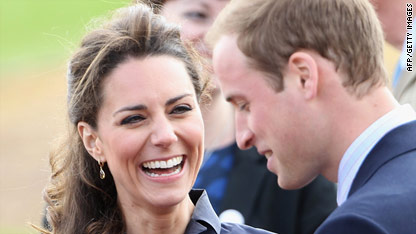
London (CNN) -- Much of the world will grind to a noisy, flag-waving halt Friday morning as Britain's Prince William, second-in-line to the throne, marries his college sweetheart Kate Middleton at Westminster Abbey.
But the weather seems unlikely to co-operate with the meticulously choreographed, carefully rehearsed event that will be attended by kings and queens, politicians and priests, and celebrities ranging from Elton John to David Beckham.
Showers are predicted, a possible dampener on street parties being held across the United Kingdom, as well as protests threatened by Muslim radicals, anarchists and anti-royalists.
About 5,000 police officers will be on the streets, including 110 on horseback and 35 with sniffer dogs -- but the world's media have deployed even more resources, with at least 8,000 staff working in London for the event.
Diana's legacy to live on through Will's Royal wedding procession Royal wedding: Inside Westminster Abbey Protest threat to royal wedding
British Culture Secretary Jeremy Hunt has predicted the ceremony will be seen by an estimated two billion people worldwide.
After the ceremony the newlyweds will be taken by carriage from the abbey to Buckingham Palace, cheered on by thousands of wellwishers. Later the couple will kiss on the balcony of the palace in front of the crowds while Royal Air Force jets fly overhead to mark the celebrations.
William announced his engagement to Middleton in November after proposing secretly in a rustic cabin in Kenya in October.
He's the older son of Prince Charles and the late Diana, princess of Wales; the most famous grandson of Queen Elizabeth II; a military search-and-rescue helicopter pilot and, by one recent measure, the most popular member of the royal family.
She's an art history graduate and the eldest child of self-made millionaires who run a party-supplies company.
They met as college students at the University of St. Andrews in Scotland, sharing an apartment with a circle of friends before they began dating. She first caught his eye when she modelled in a student fashion show wearing a see-through dress over her underwear, British reports have said -- though there's no chance she'll wear anything similar when her much-anticipated wedding dress, the last major secret element of the wedding, is finally revealed.
The couple will be married in front of nearly 2,000 guests at Westminster Abbey, where British monarchs are crowned, sometimes married, and often buried, alongside major figures from British history including Charles Darwin, Charles Dickens, Isaac Newton and George Frederic Handel.
The guests will include "Mr. Bean" actor Rowan Atkinson, a personal friend of Prince Charles, and Olympic swimmer Ian Thorpe, a friend of Prince William. Singer Joss Stone will be there, as will former British Prime Minister John Major.
But the guest list is as notable for who isn't on it as who is. Former Prime Ministers Tony Blair and Gordon Brown have not been invited, leading to accusations that the royal family favors the Conservative party over Labour. Buckingham Palace responded that Major was invited not because he was a Tory, but because he was appointed guardian of Prince William and his younger brother Prince Harry when their mother Diana died in a car crash in 1997.
Camilla greets royal campers A London cabbie's take on the wedding Royal wedding music preview Meet CNN's royal wedding iReporter
RELATED TOPICS
Prince William of Wales
Kate Middleton
Westminster Abbey
London (England)
United Kingdom
Margaret Thatcher, a Conservative and the other living former prime minister, declined the invitation. She failed to appear at a Downing Street event in her honor last year because of ill health.
United States President Barack Obama also wasn't invited, raising some eyebrows. The royal family explained that as a matter of protocol, presidents were not invited. The U.S. Ambassador to London is on the guest list, as are most members of London's diplomatic corps.
But Syria's ambassador was uninvited just a day before the wedding in light of his government's current crackdown on protesters. The Crown Prince of Bahrain, whose country is also clamping down on demonstrations, was invited but on Sunday decided not to attend.
The controversies and the couple aside, the wedding looks set to be a very traditional British event in some respects.
It will include the Lord's Prayer, hymns and Bible readings typical of English nuptials, and the always nervous moment when the priest asks that if anyone present knows of a lawful impediment to the marriage, he speak now or "hereafter forever hold his peace."
Of course, the priest asking that question Friday will be Rowan Williams, the Archbishop of Canterbury, the titular head of the worldwide Anglican church.
And while it's not unheard of for British weddings to include a singing of "God Save the Queen," this one will be unusual in that the monarch in question will actually be standing in the front row for it.
William will give Middleton a ring of Welsh gold, but she won't return the favour -- and she will not, in her vows, promise to obey him. They will exchange identical vows to love, comfort, honor and keep each other.
Of course, if William does some day become king, Middleton will then presumably have to obey him.
A ComRes poll for CNN when the engagement was announced in November found that just over half of British adults thought William would make a better king than his father Prince Charles, heir to the throne; 58 percent said Middleton would make a better queen than Charles's second wife, Camilla, the Duchess of Cornwall.
But the online poll's 2,015 respondents were split on the largely theoretical question of whether the crown should actually skip a generation and pass directly to William when his grandmother Queen Elizabeth dies. Forty-five percent said it should, while 41 percent said it should not.
SYDNEY - Prime Minister Julia Gillard Saturday warned that massive flooding in Australia's northeast would recede only slowly, as some communities learned they could be isolated by rising waters for weeks.
Muddy floodwaters have inundated a huge area of Queensland state, cutting off roads and railway lines, destroying crops, swamping mines and forcing hundreds of people to leave their homes.
"The scale of the floodwaters, the sheer size of this is best appreciated from the air and we are talking about huge areas, lots of water," Gillard told reporters after flying over the region in an army Black Hawk helicopter.
"And so it is going to be a long time back. Flood waters do not subside quickly. It takes some time, it's going to take some time here."
Residents of the largest centre hit by the flooding, Rockhampton, were warned they faced another week of misery with two major highways to the town to be cut for a week and the airport out of action for several weeks more.
Rockhampton mayor Brad Carter said while the Fitzroy River had peaked it was receding more slowly than had been predicted, and floodwaters would probably not drop significantly for at least another eight days.
"The peak has held steady for a couple of days longer than we thought," he told reporters.
Carter said residents were becoming more and more concerned about their homes, many of which can only be reached by boat, and were anxious to return to see how badly they had been damaged.
"The stress and the angst is starting to increase as people are away from their homes for a longer period of time," he said.
"There is an expectation in the community that when you reach the peak, floodwaters immediately start going down and the airport opens up. It will take something like three weeks (to open the airport)."
As some towns continued their massive clean-up, Queensland Premier Anna Bligh warned that other communities were yet to be dealt the worst from the deluge and would be completely cut off within days.
"We also know that there's many other towns downstream (from St George in the state's southeast), Dirranbandi, Bollon and Hebel likely to be cut off and isolated for many weeks," she said.
"So getting supplies into these towns will continue to be a big priority."
The flooding also claimed another life on Saturday -- that of a truck driver delivering water to the stricken town of Condamine, who died when his vehicle overturned.
The torrential rains that have lashed the state and created a massive flood zone have already claimed 10 lives since November 30, including four people who drowned after their vehicles were swept away by the surging flood waters.
As residents of those communities where the flooding had passed began clearing muddy debris, Gillard said payments of some Aus$4 million dollars ($4 million) had already been dispersed to some of the 200,000 people affected.
But she said there was more to come as the recovery intensified.
Cars are pilled up in central Toowoomba following the flash flood. The wall of water came without warning, overturning cars and swamping homes.
delivers the latest breaking news and info
A car was overturned by a flash flood in Toowoomba on Monday. The deluge was compared to an "inland tsunami" that came with little or no warning despite weeks of rain.
This building in Toowoomba was damaged by the flash flood on Monday.
The flooding hit Rockhampton, Australia, earlier this month. The flooding seen above took place on January 6.
This aerial photo shows the flooded Depot Hill area, south of Rockhamption, on January 6.
Residents of West End remove stock from a business on January 12 in Brisbane.
Debris litters the side of the road following flash flooding that killed at least 10 people in Toowoomba.
A road covered by floodwaters is closed in Ipswich, Australia, on Tuesday. Evacuation centers were filling up Tuesday night with residents seeking shelter.
MAGALANG, Pampanga—Blessed with a sunny yet cool day and aided by 15 aircraft manned by Filipino and foreign pilots, 39 special children and teens from Luzon learned and felt what it was like to be up in the sky while enjoying an aerial view of Mt. Arayat and Central Luzon’s verdant farms.
When Nikko Tallada, Jeremy Lapeña, Carol Inere and other children with disabilities and ailments joined the “Reach for the Sky” event at the airfield of the Angeles City Flying Club (ACFC) here on Saturday, more than 50 photographers were on hand to capture their joy, excitement and fear.
The children and teens rode in groups on three helicopters of the Philippine Air Force and the Philippine Navy or took turns riding with pilots on 12 two-seat light planes. They spent 10 to 20 minutes up in the air and were allowed to ride the planes and helicopters more than once.
Tallada, who lost his right leg to bone cancer last August, looked tense when he took his seat on a light plane.
“Oh, you’re a veteran of the Vietnam War,” Boy Guevarra said before his 16-year-old passenger, donning two dog tags on his neck, put on the audio system and handed his crutches to his mother.
By 10:20 a.m., the plane took off, giving Tallada what he called a “once-in-a-lifetime experience.”
“I’m happy. The flight made me happy. I feel loved because they gave us this experience,” said Tallada, who wants to be a policeman.
This feeling of being touched, said John Chua, founder of Photography With a Difference (PWD), was what his group’s project, “Reach for the Sky,” was all about. Chua, 63, has been doing advertising photography over the past 40 years.
“One photographer can make a difference and many photographers can do a lot of difference,” Chua told the Inquirer.
He was referring to his encounter in 2008 with Ian, a young man with autism. Instead of just helping the mother and Ian bond at Manila Zoo and giving her solace through photographs of her son, Chua taught Ian point-and-shoot photography.
Unique perspective
He produced what Chua called “pictures with unique perspectives.”
Tallada’s mother, Teresita, said the event also helped her son cope with the sadness of losing his leg.
Jeremy Lapeña, 14, stricken with Down Syndrome, was both excited and afraid. But he never asked Jay Cook, a retired Australian bush pilot, to put the light sport aircraft down.
The plane’s owner, Helmuth Cotter, gave the free flight because it was for a cause. “All this flying is putting a smile on the faces of the children,” Cotter said.
Ecstatic
“He overcame his fear and look at him, he’s ecstatic,” said Lapeña’s mother, Agnes. In fact, he also rode the Philippine Air Force chopper.
“This is learning for him,” she said, adding she was not afraid for her son because “we want him to experience all the possibilities.”
Terry Hockenfhull, president of the ACFC, said the 15-year-old club lent the facility because “it’s the right thing to do.”
Clouds as gift
JC Lee, 8, who is blind, jumped around as he waited for his turn and blurted loud: “Gagawin kong pasalubong ang clouds (I’ll bring clouds as my homecoming gift).”
The whole day affair saw Henry Munarriz, a 12-year-old boy with autism, helping paint a mural after the flight. Fun activities, games and picnics followed.
From Ian in 2008 to a similar but small event, called “Dream Flight,” in 2010, the PWD advocacy for the well-being and acceptance of special children and youth has grown. Support
The event started with the support of the Philippine Navy and the Kythe Foundation last year. But this year’s event also drew support from Canon Marketing Philippines and SM Cares, the corporate social responsibility arm of SM Supermalls.
Aside from Kythe Foundation, the beneficiary organizations now include the Philippine Society for Orphan Disorders Inc., Autism Society Philippines, Parent Council for the Welfare of Hearing Impaired Children Inc., Down Syndrome Association of the Philippines Inc., AD/HD Society of the Philippines, and Parent Advocates for Visually Impaired Children Inc. Photo exhibit
Photographs taken from the event will be exhibited at SM malls, said Bien Mateo, SM Supermalls vice president for mall operations and program director for SM Cares program for persons with disabilities.
“We want the exhibits to help change attitude toward PWDs and special kids and youth,” Mateo said.
Chua said he was amazed by how he got organizations and people on the advocacy through the social networking site Facebook.
He initiated similar events in Singapore and Indonesia last year and is set to do Reach for the Sky next month in the United States with Filipino photographers.
1. The Biggest New Year's Eve Concert @ Eastwood Grand New Year Countdown
Eastwood organizes the Best New Year's Eve Concert in Manila. The Official Quezon City Countdown will be in Eastwood Mall from 5pm of December 31 to the morning of January 1.
Eastwood is said to be throwing the best New Year's eve concert featuring K 24/7, Kiss Jane and Dream Carousel, True Faith, Side A, Freestyle and Journey’s frontman Arnel Pineda with The Ammo Band. It will be hosted by Cesca Litton and KC Montero. There will be free photo booths, videoke booths and other sponsored activities.
For inquiries, call the Eastwood Mall Concierge: +632 709-9888, + 63 917-8380111.
2. New Year Fireworks @ Mall of Asia!
The annual countdown of GMA-7 will happen in Mall of Asia, hosted by Tim Yap. At 11pm, there will be a 3-minute fireworks show to start off the GMA-7 telecast and a 15-minute Grand Fireworks show at 12 midnight. The Mall of Asia Veranda restaurants are accepting reservations already. On New Year's day itself, MOA will have the annual grand Mascot Parade around the mall.
If you are looking for fireworks, this is the place to be. Sadly, it seems like Makati and Bonifacio Global City won't have any fireworks activities. :(
3. Balloon Drop @ Peninsula New Year's Eve Gala Ball & Dinner
The most elegant New Year's Eve celebrations always happen at The Peninsula.
It starts with a lobby buffet from 9am to 12mn with a live band as entertainment. At 12 midnight, the balloon drops to welcome 2011! The price ranges from: P6,700++ with champagne, P6,200++ without champagne, and P3,700++ for kids 12 years old and below.
The newly opened Salon de Ning will have a P1,500++ consumable drinks and Asian-inspired tapas promo from 7pm - 2am.
To reserve, call The Peninsula: +632 887 2888 local 3758.
4. 2011 Ultimate New Year's Eve Countdown Party @ Mandarin Oriental
6.30pm -10.30pm Dinner Buffet
Paseo Uno - P2,390 nett (adult), P1,190 nett (child)
Tin Hau - Set Menus P1,580 nett to P2,930 nett
The Tivoli - P3,900 nett (adult), P1,900 nett (child)
11.00 pm Cocktails at Mo Lobby Lounge 11.45 pm Countdown by Sinosikat along Makati Avenue 12.15 am Celebrate 2011 with DJ Cocoy Ouyat at Martinis
To reserve, call Mandarin Oriental: +632 750 8888.
5. Crossover Buffet Dinner & New Year's Eve Countdown @ Dusit Thani
I love the Crossover Buffet Dinner where you can eat the best Thai food at Benjarong, the best Japanese food at Umu, the best Italian food at Tosca, and the Best Continental/Filipino food at Basix. (Tip: Reserve your seats in one of the private rooms of Umu.)
Dusit Thani will have a concert with music from the Manila Sound Project, the group of Philippine musical legends -- Hotdog, Hagibis and VST & Co., and Operation Smile singing ambassadress and miracle patient Chadleen Lacdo-o.
New Year's Eve Countdown - P3,800 nett per person.
To reserve, call Dusit Thani: +632 238-8888.
6. The best New Year's Eve Club Party will be at Republiq located in Newport Mall
(in front of Ninoy Aquino International Airport Terminal 3).
MYMP will be performing at Bar 360, leading to the NY's Eve countdown. Real Groove Band will be performing at Genting Club, leading to the NY's Eve countdown. The New Year's Eve Club Party will be at Republiq (vs. Encore) with Tim Yap, at 3am in the club.
Note: There won't be any fireworks since they are located beside an airport.
7. Other New Year's Eve Parties around the Metro:
Shangri-La Makati's Lobby Lounge Countdown (P5,000++)
Buffet dinner with 3 performers: Arthur Manuntag, Karylle Padilla, and Version 4.0 Band
Conways Bar Countdown with Kudos Loves 80's band.
To reserve, call Makati Shangri-La: +632 813-8888.
Sofitel's New Year's Eve Party (P7,231.94 nett adult, P3,615.97 nett child) Spirals Buffet starting at 6.30pm with music from Brown Inc. and trio with Ms. Rowena Barcelona as vocalist. There will be fireworks and a balloon drop at 12 midnight. To reserve tickets, call Sofitel Philippine Plaza: +632 832-6988.
Diamond Hotel's New Year's Eve Party @ 27th Floor Sky Lounge
P750 nett, 2 drinks with music from Street Beat and DJ
Corniche (lobby coffee shop) has a special P2,011 nett New Year's Eve Dinner.
To reserve, call Diamond Hotel: +632 528-3000.
Hyatt Hotel and Casino Manila's Year End Party
Dinner: Fireplace P4,500 7-course dinner with wagyu, Lili's 8-course dinner - P1,688 nett minimum of 2 persons, Marketplace Buffet Dinner P1,888 nett (child- half price).
33rd floor Roof top New Year's Eve Party: P800 walk-in, P600 nett in-house and restaurant patrons with DJ music and dance performance from Hotlegs. You'll see a bird's eyeview of all the fireworks around Manila.
To reserve, call Hyatt Hotel: +632 245-1234 loc. 7818.
Greenhills and Tiendesitas will close on December 31, 8am. There will be fireworks at the Greenhills Night Market on December 30th.
Ayala Malls, Makati City, and Bonifacio Global City do not have any official New Year's Countdown activities. :(
ABS-CBN does not have an official countdown activity for New Year's Eve yet?
They usually cover the different New Year's eve celebrations. I'm still waiting for confirmation from anybody from ABS-CBN, but they seem to be ignoring my inquiry. :(
Let me know in the comments section if there is a New Year's Eve Party that I missed that's worth checking out in Manila.
(CNN) -- An explosion that ripped through a Uganda-bound bus in Kenya on Monday killed one person and injured 26 others, a Kenyan police spokesman said, crediting security guards with potentially preventing even more carnage.
The guards confronted six people who seemed to be ordinary passengers as they tried to board the bus about 7 p.m. in Nairobi, Kenyan national police spokesman Eric Kiraithe said.
The passengers resisted the guards' attempt to examine their luggage. As the altercation heated up, the assailants dropped their bags and ran away -- and soon after, some of the luggage exploded, according to Kiraithe.
Kenyan police said that no one has claimed responsibility for the attack, nor do they know the motive. Kiraithe said the blast was most likely caused by a grenade or improvised explosive device, though investigators are still working to get more details.
The bus was owned by Kampala Coach, a passenger and delivery company named after Uganda's largest and capital city. Kiraithe said Kenyans and Ugandans frequently travel between the two countries on business.
Manny Pacquiao captured the vacant WBC super-welterweight title with a punishing 12-round unanimous decision over Antonio Margarito at Cowboys Stadium on Saturday.
Filipino hero Pacquiao won on all three judges' scorecards as he put a savage beating on Margarito and extended his win streak to 13 straight fights.
"He is really strong," Pacquiao said of Margarito. "I never expected him to be as strong as he was.
Advertisement: Story continues below
"He hurt me in the body and in the face. I am so lucky tonight."
The southpaw Pacquiao used his hand speed and ring savvy to prevail in front of a crowd of over 50,000, despite giving up a 7.71 kg weight advantage.
Pacquiao has shown little sign of losing speed and power as he moves up in weight to fight bigger and stronger opponents, but he failed to score the knockout on Saturday.
Even so, the bout didn't turn into the same kind of dull affair as Pacquiao's fight against Joshua Clottey at the same venue in March.
Unlike Clottey, Margarito came to fight. He paid the price as he suffered a nasty gash under the right eye and had a huge welt that almost closed his left eye.
At one point in the 11th round Pacquiao appeared to look towards referee Laurence Cole as if he was trying to get the ref to stop the fight.
"I feel for my opponent," Pacquiao said. "His eyes (were swollen and cut) and bloody face. I wanted the ref to look at that.
"In 12th round I wasn't looking for the knockout. My trainer said take it easy."
Pacquiao, 31, entered the ring at 67.13kg while Margarito beefed up from 68.04kg at weigh-in to 74.84 kg by fight time.
Pacquiao dominated Margarito from the outset to capture his eighth title in as many weight classes. He is also the first Asian to hold four or more major world titles.
The Mexican had his moments Saturday and hurt Pacquiao in the eighth round when he landed a left uppercut on the button that snapped Pacquiao's head back.
Margarito was most effective when he had Pacquiao on the ropes but he failed to capitalise on his big height and weight advantage.
"We were going good until I got caught," Margarito said. "And then that is when the problems started coming."
Asked if he thought of quitting because of the punishment he was taking, Margarito said, "No, no way. I am Mexican and we fight until the end."
Pacquiao earned close to $A15 million dollars while Margarito collected about $A6 million.
It was Margarito's first fight in the United States since serving a one-year suspension after he got caught with plaster-filled hand wraps in his gloves prior to a fight against Shane Mosley.